About this report
This report has been drawn up in accordance with the European Sustainability Reporting Standards (ESRS), as prescribed by the EU's Corporate Sustainability Reporting Directive (CSRD), which has applied to Royal Heijmans N.V. since 2024. In this Annual Report, we explain the steps we have taken in 2025 to further implement this directive. We are taking a phased approach and building on the foundation laid in the previous year. We are taking into account the further elaboration and clarification of reporting requirements, including the exceptions provided by the ESRS. In the coming years, we expect to further develop our sustainability reporting, both in terms of completeness and data quality as well as in integrated decision-making.
ESRS structure and requirements
In accordance with the requirements of the ESRS, the sustainability information is included in a separate section within the Management Report, the so-called Sustainability Statement. In line with this commitment and building on the structure of the Annual Report 2024, in this reporting year the sustainability data has been further developed and integrated into the thematic chapters 'Climate', 'Water', 'Biodiversity', 'Resource use and circular economy', 'Social information', 'Own workforce', 'Workers in the value chain', 'Consumers and end users' and 'Business conduct'. This set-up contributes to a coherent, transparent representation of our impacts, risks and opportunities (IROs) and strategy in the area of sustainability.
In this chapter, we report an updated description of our double materiality analysis (DMA), which was reassessed in 2025. The results of this reassessment form the basis for the overview of material ESRS topics in this report. In the following chapters, we report on our impact, ambitions, policies, strategies, actions, use of resources and progress towards our goals for each material topic. A full overview of the information requirements regarding the ESRS is included in 'Publication Requirements Notes'.
The information in the sustainability statement has been prepared in accordance with ESRS requirements. No other reporting standards have been applied.
Incorporation by reference
In order to make sure the sustainability statement is clear, some of the required information has been incorporated by reference to other parts of this Annual Report. Below is an overview of the ESRS obligations and a specific data point that can be found elsewhere in the report or financial statements to ensure stakeholders can easily consult the relevant information:
-
'How we create impact' - (ESRS2 SBM-1 paragraph 40f); 'Embedding in the organisation' - (ESRS2 SBM-1 paragraph 42a)
-
Table in 'The interests and viewpoints of our stakeholders' - (ESRS2 SBM-2 paragraph 45a)
-
'Works council' - (ESRS2 GOV-1 paragraph 21b)
-
'Management and supervision ' - (ESRS2 GOV-1 paragraph 22)
-
Table ‘Executive Board’ in 'Diversity at the Top Act report' - (ESRS2 GOV-1 paragraph 21a, 21d); Sentence 'The Executive Board has consisted of two independent directors (100%) for 10 years' in 'Diversity at the Top Act report' - (ESRS2 GOV-1 paragraph 21e)
-
'Heijmans risk framework' – (ESRS 2 GOV-5 paragraph 36a); 'Governance and operating model' – (ESRS 2 GOV-1 paragraph 22c(ii), 22c(iii), GOV-5 paragraph 36e); 'Risk landscape and risk appetite' – (ESRS2 GOV-5 paragraph 36c); 'Risk management cycle' – (ESRS2 IRO-1 paragraph 53c, ESRS2 GOV-5 paragraph 36b, 36d)
-
‘Remuneration Report For Royal Heijmans N.V. 2025’ – ‘Implementation of the remuneration policy for the Executive Board in 2025’ – ‘Variable remuneration' up to and including ‘Long-term variable remuneration (three-year remuneration)’ – (ESRS 2 GOV-3 paragraph 29)
-
Entity-specific KPI information, related to our strategy, is included in the Annex 'KPI table'
Reporting methodology
Scope
Heijmans and its activities are focused entirely on the Dutch market. The sustainability information in this report relates specifically to these activities and covers the entire value chain: from the suppliers (upstream) to the company's own operations and to the impact of the end use (downstream).
Reporting takes place on a consolidated basis. The scope of consolidation is consistent with that of the financial statements, taking into account additional requirements in the area of operational control. For some material topics, the ESRS requires that the sustainability impact of entities over which Heijmans exercises operational control is also taken into account, even if full ownership does not apply.
Definition of operational control according to Annex 2
Operational control (over an entity, location, activity or asset) is the situation in which the company has the ability to direct the operational activities and relationships of the entity, location, activity or asset. We distinguish four categories of associate, differentiating between full operational control, shared operational control, no operational control and situations without operational control, but with influence. This framework enables transparent and proportional reporting of Scope 1, 2 and 3 emissions, and ensures consistency with the previous year and future developments. This system lays the foundation for a robust and reliable reporting infrastructure that is flexible enough to be evaluated and adjusted in subsequent cycles if needed. The definition of operational control has remained unchanged from last year.
Whoon and Van Gisbergen
The sustainability information from Whoon and Van Gisbergen is integrated into the consolidated reporting in this report in both quantitative and qualitative terms. Quantitative data has been collected using a central tool, whereby the DMA has been used to determine which data points are relevant. For each data point, it is clear whether actual figures are available. Where data is unavailable, extrapolations or estimates have been used (as explained in the ‘Reporting requirements’ tables). On a qualitative level, working sessions were organised with the management of Whoon and Van Gisbergen to discuss existing ESG policy documents, strategic focus areas and any deviations. Both companies endorse Heijmans' ESG policy and do not pursue a separate policy. A joint implementation plan has been drawn up with the aim of further embedding the ESG policy in the coming years through specific actions and entity-specific targets.
Hegeman
On 11 November 2025, it was announced that Heijmans will acquire the business operations of its industry partner Hegeman from Amersfoort-Nijverdal (100% subsidiary). The activities are housed as an independent unit within Heijmans Working. The financial data has been included in the financial statements from the acquisition date — 17 December 2025. In view of the fact that the acquisition took place recently, there is currently no insight into the sustainability information. Heijmans will develop a step-by-step plan for further integration of KPIs, action plans, targets and policy in accordance with CSRD legislation in 2026. The basic principle is to report on a fully consolidated basis for the 2026 reporting year.
Applied reporting principles
Time horizon
For reporting purposes, Heijmans has deviated from the standard time horizon as defined in ESRS 1, section 6.4. This choice is in line with our 'Together towards 2030' strategy. This strategy forms the basis of our long-term vision and has been key in formulating our bold statements. In order to promote transparency and to ensure progress can be measured, 2027 has been designated as an important milestone in this period. This enables us to perform mid-term reviews and adjust our approach where necessary to ensure we can continue to work effectively towards the 2030 targets.
The definitions of short, medium and long are as follows:
|
Time horizon |
Duration |
Definition |
|
Short term |
≤ 1 year |
An impact, risk or opportunity is short term if the effect occurs within 1 year from 2025. |
|
Medium term |
> 1 year and < 3 years |
An impact, risk or opportunity is medium-term if the effect occurs in the next 1 to 3 years from 2025. |
|
Long term |
≥ 3 years |
An impact, risk or opportunity is long-term if the effect occurs after 3 years from 2025. |
Classified and sensitive information
In this reporting year, no use was made of the possibility to exclude information elements relating to intellectual property, know-how or innovation results from the reporting, nor are there currently any issues or developments that qualify for an exemption from reporting on the basis of confidentiality or other grounds for exemption.
Estimates and sources of uncertainty and assumptions
The 'Reporting requirements' table states, where applicable, where there are estimates, measurement uncertainties and assumptions related to our KPIs, including those within the value chain. By making this explicit, we strive for transparency and offer users greater insight into the context and interpretation of the reported figures. This helps stakeholders to assess the results with due care and take into account potential limitations and future tightening in the accuracy of measurements.
We continue to focus on increasing the reliability of our KPIs. We do so by improving our data collection, refining methodologies and using more advanced analysis tools. This allows us to gradually strengthen the quality and substantiation of our sustainability information, including in the value chain.
External assurance
No external assurance has been obtained for our indicators, with the exception of data points 48, 49 and 51 within the topical standard Climate. These data points are tested annually by KIWA in the context of our CO₂ Performance Ladder certification and were validated once in 2024 by the Science Based Targets initiative (SBTi).
Comparative figures
For KPIs that were already reported in the 2024 reporting year, these figures are included in this report for comparison. For gross Scope 1, 2 and 3 emissions and total greenhouse gas emissions, we also report figures for the 2019 baseline year. No comparative data is available for the KPIs introduced in 2025. These KPIs consist partly of additions following the reassessment of the DMA and partly of new KPIs that fell under the phase-in of ESRS in the previous reporting year.
Reporting errors in previous years and methodology changes
We report transparently on any reporting errors from previous years. We therefore explain, where applicable, the nature of a material error, as well as the correction made or – if a correction is not possible – the circumstances that led to the error.
Within the topical standard Climate, some reporting errors were identified and corrected in the baseline year figures and the comparative figures for 2024 during this reporting year. Heat supplies (Scope 2) for residential construction projects in the delivery phase and the additive AdBlue (Scope 1) have been included from this year, where they were not included in previous years. In both instances, the baseline year figures for 2019 and comparative figures for 2024 have been recalculated. In addition, a technical error was detected at a supplier in 2024, resulting in incomplete reporting of electricity, petrol and diesel consumption. This error has been corrected, resulting in an increase of 367 tonnes of CO2e in the corrected comparative figures. A methodological improvement has also been made at the same supplier to ensure a more complete picture of fuel consumption is provided. This adjustment resulted in an increase of 340 tonnes of CO₂e in 2024 and a decrease of 1,246 tonnes of CO₂e in the 2019 base year. It was also established that, for recalculations of the base year, the most recent emission factors had been incorrectly used. In line with the GHG Protocol, the original emission factors from 2019 have therefore been restored. Finally, it was established that GvOs may not be used for the calculation of Scope 1 emissions. Therefore, from this year onwards we apply the emission factor for grey gas instead of that for green gas. This adjustment results in an increase of 1,358 tonnes of CO₂e for 2024; for the 2019 base year, this change has no effect.
For the topical standard Water, a methodological adjustment has been made in the calculation of the total water use. This change led to an adjustment of the comparative figure for 2024. Under the previous methodology, water use was extrapolated from the last invoice date to the end of the calendar year. As water bills are often only received after year-end closing, this method has proven to no longer be representative. The calculation has therefore been adjusted, and the current correction is based on the actual water use invoiced over the last two years.
For the topical standard Own workforce, a methodological adjustment has been made when calculating the safety ratio for own employees. In 2024, the number of hours worked continued to be determined based on FTEs and the number of workable weeks. From this year onwards, the actual hours recorded will be used. This change ensures that variables such as absenteeism are included in the calculation with greater accuracy, which presents a more reliable picture of the safety ratio.
Expertise on sustainability topics and the role of the Executive Board
The Executive Board has in-depth knowledge and experience in the area of sustainability and actively uses this knowledge and experience to provide guidance on sustainability issues. For material sustainability topics, expertise is present at both holding level and within the various business areas. These internal specialists are involved in assessing specific IROs where necessary.
Should it transpire that certain knowledge is missing or needs to be supplemented, the board takes specific actions to address this lack of knowledge. This takes place, for example, by engaging external experts or by working with relevant sustainability networks and partnerships, such as the Green Metropolis Region Arnhem-Nijmegen, Stichting Struikroven and the Natuurladder network. This provides valuable insights and contributes to strengthening and updating our sustainability strategy. By playing an active role in such networks and consultation bodies, the Executive Board remains in a position to move towards sustainable value creation and to achieve Heijmans' ambitions.
Business model and strategy
The overview on the next page provides an insight into the interfaces between the DMA reassessment in 2025 and our 'Together towards 2030' strategy. In this reporting year, the pillars Welfare, Sustainability, Connection, Producibility and Team were reassessed and linked to the relevant ESRS standards from the CSRD in the overview. This shows how the results of the DMA reassessment in 2025 are in line with our strategic direction and decision-making.
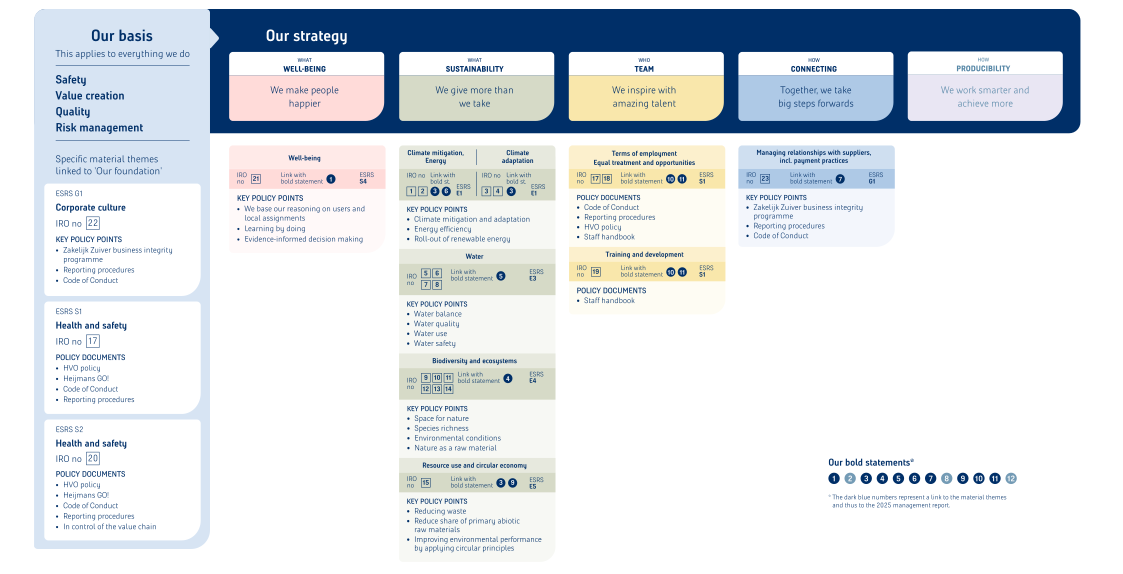
Strategy in relation to sustainability topics
It is essential and logical that our strategy and reporting focus on the sustainability topics that are most relevant to Heijmans and our business. To make sure this is the case, a steering committee has been established with representation from the Strategy, Procurement and Sustainability disciplines as well as the business areas, and chaired by a member of the Executive Board. This committee oversees the implementation of due diligence, monitors the progress on the material topics and approves any changes. We assess whether our activities are in line with the material topics that have the greatest impact on both our organisation and our environment. By regularly assessing these topics and reviewing them where necessary, we ensure that the most important developments within Heijmans and in our value chain are always reflected in our policy and our reporting.
In 2025, we reassessed our DMA under the supervision of the steering committee, during which the impact of the material topics on the business model, value chain, strategy and decision-making was assessed. In this reporting year, however, we have not yet fully and systematically assessed how the interests of our own workforce, workers in the value chain and consumers and end users are incorporated into the strategy and business model. Although these interests are certainly involved in policy and decision-making, including through regular HR processes, contract management, client and resident surveys as well as our broader stakeholder dialogue, we conclude that this involvement does not yet take place in a framework with sufficient structure. Actions that influence the strategy and/or the business model will be included under the relevant material topics with the associated methodology and assumptions. Heijmans has currently formulated targets for the topical standards of Climate, Water, Biodiversity and Own workforce. We aim to embed these ambitions more deeply in the business model in the coming years by making the connection with our products, services and stakeholders and vice versa more explicit.
See the 'Our strategy and how we create value' section for an explanation of our business model.
Although a formal resilience analysis has not yet been carried out for all sustainability topics in 2025, a resilience analysis has been carried out for the topical standard of Climate – unlike in 2024. In doing so, we are responding to the need to test the robustness of our strategy in relation to climate change and adjust it where necessary. We aim to expand this resilience analysis to other sustainability topics in the coming years.
In 2025, no separately quantifiable direct financial impacts were identified that have not already been included in the financial reporting. Potential financial effects have been illustrated through our risk and materiality analyses, but cannot be reliably quantified separately at this time.
There are changes in the material IROs in 2025 compared to the previous reporting period, as explained in the 'Reassessment of the double materiality analysis' section.
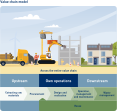
We are Heijmans, creators of the healthy living environment
Our role in the value chain
Our value chain encompasses a wide range of activities that together contribute to the development, realisation and maintenance of real estate and construction projects. This value chain extends from the extraction of raw materials to (demolition) waste management and reuse at the end of a project's lifespan. The value chain is divided into three main segments: upstream, our own operations and downstream.
Upstream
In the upstream phase, we focus on the extraction of raw materials and the procurement of required materials and services. This represents a crucial link in our value chain, in which sustainability and labour rights are key. We take a careful, conscious approach to safety risks in order to operate with integrity and responsibility and contribute to a fair, healthy and safe working environment.
In addition, we process various types of materials such as steel, timber, concrete, (natural) stone, asphalt bitumen, plastic and installation components. We focus on the impact of raw material extraction and production on circularity and biodiversity, the impacts on water systems and the contribution of Scope 3 emissions to climate change. We purchase the majority of these materials from suppliers in the Netherlands, while a smaller portion comes from other European countries and only a fraction from outside Europe.
Our supply chain consists of a wide range of partners, including contractors, suppliers, subcontractors, building material producers and employees in the transport and raw materials extraction sectors.
By taking this careful approach in the upstream phase, we are taking steps towards a more sustainable construction process, actively striving for responsible procurement and a positive impact on the environment and society.
Our own operations
The phase of our own operations is at the heart of our business operations and includes design, engineering and the actual construction and service. This is the phase in which we combine our expertise and innovative power to realise and manage projects. This phase presents opportunities to integrate sustainable solutions that contribute to better water management, reduce Scope 1 and Scope 2 greenhouse gas emissions and protect biodiversity.
At the same time, the health and safety of our employees remains a top priority, as do ensuring fair terms of employment, equal treatment and opportunities, and paying attention to training and development.
In addition to our own employees, subcontractors and non-employees, such as secondees, temporary workers and freelancers, are also actively involved in our own operations.
Downstream
In the downstream phase, the focus shifts to the management and maintenance of construction projects, and/or to dismantling or repurposing. This part of the value chain plays a crucial role in extending the lifespan of our projects and limiting their ecological impact on the climate and water. Scope 3 emissions affect climate change, while climate-adaptive structures have a direct impact on people and the environment. When designing buildings, we make sure to take sustainable water management into account. Responsible waste management – including careful separation of residual streams – and a commitment to circularity in the design phase enable us to contribute to a more sustainable end result and reduce the amount of residual waste. At the same time, our projects make a positive contribution to users' well-being by improving their living and working environment.
Upon delivery of the end product, various stakeholders come into play, such as clients, end users, local residents and local communities. Careful project and environmental management and well-organised delivery are essential to meet the expectations of all parties involved. Our clientèle consists of both private (future) homeowners and business clients, such as real estate investors, cooperatives, companies and government bodies. End users, including people and organisations, play a major role in the final utilisation and use of buildings and infrastructure. Their feedback is very important because it reflects the quality of our projects and has a direct influence on our reputation and client satisfaction. By actively listening and responding to their experiences, we continue to improve our processes and projects and build sustainable relationships with clients and communities.
Across the entire value chain
The corporate culture influences the entire value chain and determines how we interpret business conduct. This includes compliance with our Code of Conduct, the prevention of corruption and bribery, and the protection of whistleblowers, both at suppliers and within our own projects and operations and in relationships with clients and end users. This ensures the culture consistently makes a contribution to safety, quality, reliability and sustainable performance throughout the value chain.
Industry organisations play an essential role in supporting and strengthening the construction chain. Their influence extends across the entire value chain and includes representing interests, sharing knowledge, training and promoting cooperation and innovation between parties. They contribute to a well-organised and efficiently functioning construction sector, stimulating innovation and sustainable development.
By taking an integrated approach to the entire value chain – from raw material extraction to reuse/waste management – we are able to not only reduce our ecological footprint, but also strengthen our competitive position. This enables us to respond to opportunities for sustainable growth, innovation and value creation for all our stakeholders.
Double materiality
The 'Material topics' figure provides insight into the analysis of material topics for Heijmans. The analysis is displayed based on two dimensions: financial materiality and impact materiality.
Financial materiality indicates the extent to which risks and opportunities related to sustainability topics may arise for Heijmans and could have a material financial impact on the company. Impact materiality indicates the extent to which a topic affects people and the environment, both within Heijmans' own activities and in the upstream and downstream value chain, for example through Heijmans' products, services or business relationships.
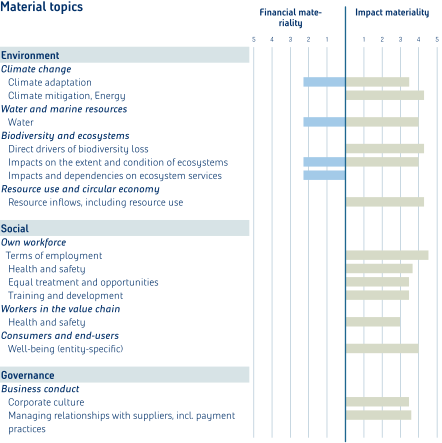
Definitions of material topics
Climate mitigation, Energy
Heijmans' negative impact on climate change is expressed in Scope 1, 2 and 3 greenhouse gas emissions. This concerns both direct emissions within the company's own operations, such as the use of electricity and fossil fuels, and indirect emissions in the value chain. Indirect emissions include emissions arising from the production and transport of building materials by suppliers, the procurement of raw materials and emissions arising during the utilisation phase of completed buildings and infrastructure. The focus can be placed on product concepts that contribute to climate mitigation and energy efficiency in this topic. Furthermore, Heijmans can also contribute its expertise to achieving projects, including in areas where grid congestion is present.
Climate adaptation
The impact and opportunities for Heijmans lie in increasing the resilience of communities by designing climate-adaptive buildings and infrastructure. The growing demand for these types of solutions leads to additional investments and higher revenue in sustainable construction, service and maintenance projects, giving Heijmans the opportunity to make an important contribution to a future-proof living environment. Climate-adaptive construction also contributes to lower costs and helps value chain partners to be better prepared for the consequences of climate change, strengthening stability in the sector and the supply chain.
Water
The negative impact on the water system arises from our activities in the public domain and on our own sites, in particular in the areas of water quality, water use, water balance and water safety. Negative effects may occur in the value chain as a result of supplier activities, such as water use, discharges and other water-related interventions in the extraction and production of materials and services. Heijmans can achieve a positive impact by making sure to take the water system into account when designing buildings. At the same time, there is a risk that there will be limited or even no availability to water within future area developments, which means that projects cannot be realised. This may lead to a decline in Heijmans' revenue.
Direct drivers of biodiversity loss
The negative impact on biodiversity and ecosystems arises from our construction activities and from activities in the supply chain, such as the extraction of raw materials and the production of materials. These activities contribute to a loss of biodiversity and degradation of the ecosystem.
Impact on the extent and condition of ecosystems
The negative impact on biodiversity and ecosystems within the supply chain can contribute to land degradation, desertification and soil sealing. This entails risks, including non-compliance with increasingly stringent laws and regulations, and potential reputational damage in the area of environmental protection. This could ultimately lead to a decline in Heijmans' revenue.
Impacts and dependencies on ecosystem services
The risk of decreasing availability of nature and ecosystem services may jeopardise the continuity of our operations and the on-time delivery of projects, and ultimately lead to a decline in revenue. At the same time, actively strengthening biodiversity within projects offers clear opportunities: it improves ecosystem services, strengthens Heijmans' reputation and increases the value of the projects implemented.
Resource inflows, including resource use
The negative impact on the environment arises from the extraction and production of raw materials and materials by our suppliers and subcontractors, as these materials are used in Heijmans' activities.
Terms of employment
This is the impact that offering appropriate terms of employment, including through collective employment contracts, has on our own employees. This includes ensuring a living wage, appropriate working hours, freedom of association, the presence of a works council and the right to information, consultation and participation for our own staff.
Health and safety of own workforce
The negative impact on the health and safety of our own workforce due to potentially hazardous situations on (construction) sites.
Equal treatment and opportunities
This is the impact that offering equal treatment and opportunities in the workplace has on our own employees. We create an inclusive work environment where everyone feels valued by ensuring gender equality, equal pay, equal access to employment, the inclusion of people with disabilities, taking actions against violence and harassment, and promoting diversity in the inflow and advancement of our own employees.
Training and development
Our activities have an impact on our own employees by offering development opportunities in the areas of skills, safety and personal development. We do so through training and education as well as informal learning in practice. Heijmans actively pays attention to future-proofing our employees.
Health and safety of workers in the value chain
There is a negative impact on employees of subcontractors, suppliers, ancillary parties and contractors due to their exposure to the risk of accidents at work.
Well-being
There is an impact on consumers and end users because Heijmans' interventions make a positive contribution to their well-being.
Corporate culture
The impact on end users, own workforce, customers, contract parties, workers in the value chain, shareholders, suppliers, subcontractors and society as a whole is created by transparent and sustainable business practices that derive from policy, training and other initiatives for business conduct.
Management of supplier relationships, including payment practices
The impact on suppliers arises from managing relationships that focus on fair and responsible business conduct, including fair and timely payment practices.
In dialogue with stakeholders
Stakeholder engagement
Heijmans places huge importance on stakeholder engagement. As such, we held a stakeholder meeting at our headquarters in Rosmalen on 11 November 2025 to provide an update on and discuss the progress of our 'Together towards 2030' strategy as well as to present and discuss the results of the DMA reassessment.
Results and integration in our strategy
During the meeting, input was gathered from a range of stakeholders to validate the results of the reassessment of the materiality analysis from their perspectives. This helps us to ensure that our strategy is not only financially sound, but also focused on creating sustainable value for all stakeholders, taking into account their views and interests. This means that stakeholder input is structurally integrated into strategy development and into implementing and complying with other sustainability requirements.
Furthermore, the results of the stakeholder meeting were fed back to the Executive Board, Group management and the Supervisory Board to make sure these insights can be used in strategic decisions going forwards. The Management Report, in the chapter entitled 'In dialogue with stakeholders' further explains how we shape our dialogue with stakeholders.
Reassessment of the double materiality analysis
Introduction
At the beginning of 2024, we carried out a double materiality analysis (DMA) in preparation for reporting in accordance with the CSRD. For more information, please refer to the 'Double materiality analysis' section in Royal Heijmans N.V.'s Annual Report 2024. The aim was to assess which sustainability topics, in the form of impacts, risks and opportunities, have a significant impact on our organisation as well as on people and the environment.
We carried out a reassessment of our DMA in the spring of 2025 to further strengthen the alignment with our strategy and with developments within the sector. The subjects that are considered material for Heijmans are explained below based on their impact, risks and opportunities for both the organisation and the world around us.
The process
We took the following steps to determine which sustainability topics are most significant for Heijmans:
-
List of organisational and market changes
-
Mapping of the value chain
-
Updates of other relevant points
-
Stakeholder engagement
-
Integrate stakeholder insights
-
Research and analysis
The process involves employees from the Sustainability, Risk, Safety, HR, Procurement, Legal Affairs and Strategy disciplines. In addition, we involve internal sustainability experts from the company's various departments. The Executive Board validated the results. The Supervisory Board's Audit & Risk Committee has been informed.
Material impacts, risks and opportunities
We provide an overview of the material impacts, risks and opportunities in the relevant chapter for each topic. The general information consists of the material topic, the shortlisted topic and its place in the value chain. In addition, we describe the impact materiality based on the type of impact (current and potential), the nature of the impact (positive or negative) and the description of the impact. Finally, the financial materiality is described using an explanation of the risk and/or opportunity.
Methodology and assumptions
In this section, we explain the methodology we use to identify the relevant sustainability topics.
Process steps
Phase 1: List of organisational and market changes
This phase assesses the extent to which changes within Heijmans or in the operational environment lead to a reassessment of the DMA. This looked at significant changes compared to 2024, such as changes to the group structure, legal entities or strategic positioning.
Phase 2: Mapping of the value chain
The most recent value chain analysis is updated to include the results from Phase 1 (list of organisational and market changes). The analysis focused on assessing the scope, completeness and relevance of the value chain elements in the upstream and downstream value chain.
Phase 3: Updates of other relevant points
Additional insights and external input relevant to updating the materiality analysis are included in this phase. This includes changes to laws and regulations, the lessons learned in 2024 and more.
Phase 4: Stakeholder engagement
Stakeholders most affected by our activities are identified and involved in defining our impact on people and the environment. Stakeholders who have a significant influence on Heijmans and who therefore entail risks or opportunities are then identified. These stakeholders are represented in the process, both directly and indirectly, and surveyed through a questionnaire. There have been no consultations with affected communities to identify impacts on water pollution or resource use and the circular economy.
Phase 5: Integrate stakeholder insights
The insights gathered in Phase 4 (stakeholder engagement) are incorporated in the reassessment of the materiality analysis. The input is collected, categorised and structured per stakeholder group, and reviewed against the most recent material impacts, risks and opportunities. On this basis, the list of material topics is validated and the subtopics and description of the impacts, risks and opportunities assessed on a topic-by-topic basis to ensure that they are in line with the stakeholder insights received.
Phase 6: Research and analysis
Additional research is conducted based on both internal and external sources to determine if material changes have occurred. Peer benchmarks, industry reports and relevant publications are used to do so. Screening of assets, activities or business locations did not take place to identify impacts on water pollution or resource use and the circular economy.
Following the 2025 reassessment, we will reassess the materiality analysis again in 2027, or earlier if relevant internal or external developments make this necessary. This ensures our analysis remains up to date and aligned with changes in our organisation, value chain and environment.
The process for identifying, assessing and managing IROs is integrated into Heijmans’ risk management. The outcomes of the DMA are incorporated into our risk taxonomy and periodic risk assessments. Sustainability risks are discussed in regular risk discussions and in the Audit and Risk Committee, and form part of project selection, strategic decision-making and the determination of our risk appetite.
Results of the reassessment
The material topics identified in 2024 based on the DMA remained unchanged in the 2025 reassessment. This means that topics such as Climate change (E1), Water and marine resources (E3), Biodiversity and ecosystems (E4), Resource use and circular economy (E5), Own workforce (S1), Workers in the value chain (S2) and Business conduct (G1) are also considered material for Heijmans in 2025. In addition to these existing topics, Welfare was identified as a new entity-specific topic for 2025, within Consumers and end users (S4).
The reassessment has resulted in the following changes:
Climate
In 2025, the impacts, risks and opportunities in the topical standard Climate were further tightened and expanded. The opportunity in the area of climate adaptation remained unchanged in 2025 compared to 2024. A new positive impact was added, recognising that Heijmans actually makes a measurable contribution to a future-proof living environment and the well-being of users, companies and local ecosystems by implementing climate-adaptive projects.
In terms of climate mitigation and energy, the impacts, risks and opportunities were adjusted in 2025. Whereas one positive and one negative impact were reported in 2024, they were split into two separate negative impacts in 2025. This breakdown enables more focused support to be placed on the different sources of emissions. This creates more insight into where the greatest impact lies and enables more effective actions to be taken, both within our own operations and in the value chain.
For more information, see the section 'Climate – Impacts, risks and opportunities'.
Water and marine resources
In 2025, the negative impact on water was further broken down. While one joint negative impact was discussed in 2024, two separate negative impacts have now been distinguished: one for Heijmans' own operations and one for the upstream value chain (suppliers). This breakdown enables the different positions in the value chain to be distinguished more clearly, giving a better insight into where the greatest impact lies and enabling more targeted actions to be taken. A new positive impact was added in 2025, recognising that Heijmans can also actively contribute to improving the water system through innovative solutions for water storage, reuse of rainwater, applying sustainable design principles and more. The risk of limited or no availability of water has also been identified as a specific risk. The increasing scarcity of (drinking) water, stricter regulations and climate change have made this risk more relevant. Making this risk explicit allows Heijmans to anticipate potential bottlenecks in future projects and area developments in good time.
See the 'Water – Impacts, risks and opportunities' section for more information.
Biodiversity and ecosystems
In 2025, the impacts, risks and opportunities on biodiversity were further tightened and expanded compared to 2024. While one negative impact was reported across the entire value chain in 2024, the impacts in 2025 are broken down by segment in the value chain. This enables the prevention of negative effects and use of opportunities for restoring biodiversity to be managed more effectively. New risks were also added in 2025, such as the risk of land degradation, desertification and soil sealing, as well as the risk of negative effects on endangered species. Strengthening biodiversity to improve ecosystems has also been added as an opportunity. These changes are the result of Heijmans' approach in the area of biodiversity and better alignment with current insights and international standards.
See the 'Biodiversity – Impacts, risks and opportunities' section for more information.
Resource use and circular economy
In 2025, the subtopic 'Resource use and circular economy' changed from 'Material outflows' to 'Material inflows', including use of materials. The IRO is therefore mainly focused on the impact of the extraction and production of raw materials and materials by suppliers and subcontractors used within Heijmans' activities. This change allows for a more targeted approach to making material flows more sustainable throughout the value chain as well as to manage the environmental impact of the use of materials more effectively. The greatest environmental impact in the construction industry often stems from the extraction and production of materials. By placing our focus at this stage, we will have the greatest opportunity to reduce the negative impact on the environment, encourage circularity in the market and combat the depletion of natural resources.
See the 'Resource use and circular economy – Impacts, risks and opportunities' section for more information.
Own workforce
The scope of the subtopics for our own workforce was extended in 2025. In addition to 'Health and safety', 'Equal treatment and opportunities' and 'Education and development' have also been named as separate subtopics. The IRO on 'Terms of employment' defined in 2024 has been included in the topic of 'Equal treatment and opportunities' in 2025.
This expansion is in line with societal developments and the growing focus on social sustainability within the sector. By defining these topics as separate impacts, risks and opportunities, Heijmans can focus more on promoting equal opportunities, encouraging personal growth and creating a safe, inclusive and future-proof working environment for all employees.
See the 'Own workforce – Impacts, risks and opportunities' section for more information.
Workers in the value chain
In 2025, the subtopic for workers in the value chain changed from 'Terms of employment' to 'Health and safety'. By designating 'Health and safety' as a material impact, Heijmans can focus even more specifically on the prevention of safety incidents, improving awareness of safety and implementing effective control actions within the value chain.
See the 'Workers in the value chain – Impacts, risks and opportunities' section for more information.
Consumers and end users
In 2025, 'Well-being' was defined as an entity-specific subtopic. This is directly in line with Heijmans' strategy, in which 'Well-being' is one of the five strategic pillars. The addition of 'Well-being' underlines Heijmans' social responsibility and the ambition to contribute to a healthier, more liveable Netherlands. By integrating 'Well-being', social value creation becomes a structural part of sustainability reporting.
See the 'Consumers and end users – Impacts, risks and opportunities' section for more information.
Business conduct
In 2025, changes were made to the 'Business conduct' topic. While two further negative impacts were defined separately in terms of 'Whistleblower protection' and 'Corruption and bribery' in 2024, they were integrated into the broader subtopic of 'Corporate culture' in 2025. As a result, they now form an integral part of Heijmans' broader governance and integrity framework. This change is linked to the structural embedding of integrity, openness and reporting procedures within the organisation. By firmly embedding the anti-corruption and bribery policy and whistleblower protection in the corporate culture, these impacts are considered to be well controlled. In 2025, the impact type for 'Supplier relationship management', including payment practices, was changed from 'current' to 'potential'. This adjustment reflects the effectiveness of the mitigating actions taken, including our commitment to pay invoices earlier.
See the 'Business conduct – Impacts, risks and opportunities' section for more information.
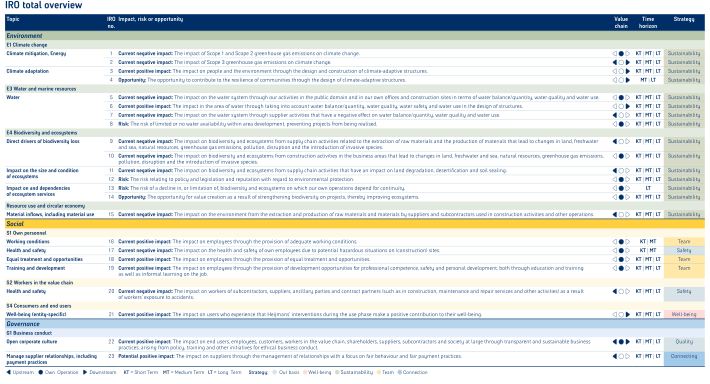
Policy, actions, key performance indicators and targets
The 'Climate', 'Water', 'Biodiversity', 'Resource use and circular economy', 'Social information' and 'Business conduct' chapters describe policies and action plans for the management of each material topic. These policies include references to external initiatives, the scope and any exclusions. Heijmans emphasises that all its operations are located exclusively in the Netherlands. The Executive Board is responsible for implementing the policy, due diligence, impacts, risks and opportunities, action plans, key performance indicators and targets. Progress and targets are monitored using reports to the Steering Committee and the Executive Board.
Heijmans has policies and action plans in place for the material topics relating to its own operations. Currently, the organisation lacks sufficient structural insight into the resources used to implement the strategy and how progress is monitored. In 2025, work has been carried out on several fronts, including linking dashboards and key performance indicators to the strategy, integrating financial data into ESG reporting, professionalising governance structures and organising structural consultation and alignment with stakeholders. We do not yet have detailed policies and action plans for topics related to the value chain.
The aforementioned chapters contain brief explanations of the definitions of the reported indicators. The 'Reporting requirements' tables contain additional information about the methodologies used, assumptions and limitations as well as any validation by an external body. The targets set are included in the tables. Progress for managing the impacts, risks and opportunities is not being structurally monitored at present for topics for which targets have not yet been set; this will receive greater attention in the coming years. Tracking effectiveness is part of our quarterly reporting. When quantitative measurements are not available, we report on progress based on qualitative information.
Due diligence statement
The table below shows where in our sustainability statement we provide information about our due diligence process, including how we apply the most important aspects and steps of our due diligence process.
|
Key elements of due diligence |
Reference |
Page numbers |
|
|
a) |
Integrate due diligence into governance, strategy and business model. |
Social information |
202 |
|
b) |
Involve affected stakeholders in all important steps of due diligence. |
In dialogue with stakeholders, Social information |
137, 202 |
|
c) |
Identify and assess negative impacts. |
Social information |
202 |
|
d) |
Take actions to address those negative impacts. |
Social information |
202 |
|
e) |
Monitor the effectiveness of these efforts and communicate about them. |
Social information |
202 |