Climate change is one of the biggest challenges of our time. Increasingly extreme weather conditions have far-reaching consequences for our nature and living environment. As a development and construction company, Heijmans takes a significant responsibility in limiting its negative impact on the climate. We take a targeted approach towards climate neutrality and reduce our direct emissions with actions such as electrification and the use of renewable energy. The biggest challenge lies in the value chain. Together with our partners, we reduce value chain emissions through the sustainable use of materials, innovations and energy-neutral buildings. At the same time, there is an opportunity to create healthy living environments, designs and buildings that contribute to a climate-resilient society. Heijmans is fully committed to the transition to fully climate-neutral building and working, with a clear goal of achieving net zero by 2040 on the horizon.
Impacts, risks and opportunities
Climate scenario analysis
A key input for our is the climate scenario analysis. It is based on the Task Force on Climate-Related Financial Disclosures (TCFD) methodology, with a ten-year horizon and in line with the highest emission scenario (RPC 8.5) as defined by the Intergovernmental Panel on Climate Change (IPCC).
We have weighed the potential impact of physical risks and opportunities (both chronic and acute) and transition risks on our operations.
To further substantiate this, we use geospatial analyses based on a statistical classification of European regions (NUTS; Nomenclature of Territorial Units for Statistics), including maps from the Climate Impact Atlas. This allows us to identify location-specific vulnerabilities and opportunities.
Physical climate-related risks
Climate change affects the availability of raw materials, the accessibility of construction sites and the delivery of projects that are resilient to extreme weather. We analyse how climate effects, such as extreme rain, floods, heatwaves and storms, can affect our operations, particularly with regard to the safety of our employees and the sustainable quality of completed projects. Climate models provide guidance for the potential impact, yet uncertainty remains about the long-term frequency and intensity of such events.
We assess the physical risks in the Netherlands using the Royal Netherlands Meteorological Institute's (KNMI) climate scenarios, which translate the insights from the IPCC into the situation in the Netherlands. These scenarios outline the consequences of both high and low global emissions. For both emission pathways, the KNMI also distinguishes between a dry and wet Dutch climate in the future. The scenarios run until the year 2100. The low-emission scenario aligns with the goals set by the Paris Agreement, while the high-emission scenario assumes a global temperature rise of around 4.9°C by 2100. We are closely aligned with the local reality of our projects, which are only carried out in the Netherlands.
For upstream effects outside the Netherlands, we combine external sources and publications with supplier information. We do this in close collaboration with the Procurement department.
Climate transition risks
Changing laws and regulations, including stricter requirements for greenhouse gas (GHG) emissions and the transition to renewable energy, can affect our business model and our choices in the value chain. Understanding these risks is essential for ensuring that we continue to comply with laws and regulations while strengthening our competitive position.
This enables us to better respond to the uncertainties around the speed and scope of implementing new legal standards for emissions and sustainable building practices, which may shift demand for materials and technologies.
In order to understand and assess the transition risks, we use two different scenarios from the Network for Greening the Financial System (NGFS). The first scenario, 'Hot House World – Current Policies', outlines a world in which climate policy remains limited to existing agreements. This scenario results in high physical risks due to extreme weather conditions and rising costs for adaptation, but low transition risks with limited consequences. In contrast, the ‘Orderly – Net Zero’ scenario assumes timely and consistent policy, leading to a managed transition to a low-carbon economy. This brings greater transition risks in the form of significant investment and innovation, but provides stability in the transition to net zero and helps to mitigate physical climate-related risks.
Link to the financial statements
We test the key climate-related assumptions in our financial reporting — such as forecasts for asset valuations, potential impairments of equipment and our investment in AsfaltNU, and impairment risks relating to land positions — against the climate scenarios used. In terms of the risk profile and the Dutch context, these scenarios directly align with the financial risk assessments as explained in the financial statements. In this way, they provide a consistent framework for assessing both physical risks (such as flooding or delays due to water stress) and transition risks (such as rising CO₂ prices and stricter emission requirements).
Locked-in greenhouse gas emissions
Our existing investments in construction machinery and heavy equipment have an impact on future emissions. We have therefore analysed how these emissions affect our reduction targets and where they may increase the transition risks.
As long as vehicles and machinery have not been electrified or replaced by more sustainable alternatives, they will remain a source of locked-in emissions. In order to avoid this, we are making targeted investments in the transition to a fully electric machine fleet.
Since 2022, the starting point has been that electricity-powered equipment is the standard, unless there is a demonstrable reason to deviate from this policy. This allows us to accelerate sustainability when executing our projects and implement a structural reduction to our climate impact.
Scoring
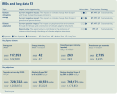
We assess the (potential) risks from the climate risk analysis against our strategy and our existing processes. The most important results are summarised in a table showing the time horizon, the location in the value chain and the financial impact (0 = low, 3 = high) for each risk in the most negative scenario with unchanged business operations. We also show a resilience score for each risk (1 = low, 5 = high).
Resilience
The resilience score is supported by an explanation of existing and future mitigation actions, which may include plans for investment, updating procedures and moving products and services within the portfolio.
Despite applying different scenarios, the analysis still contains uncertainties as the potential effects remain estimates based on progressive scientific insights. The analysis is therefore not a one-off exercise. Instead, it is a continuous process that is refined throughout the year.
The risks arising from this analysis have been assessed based on the adaptability of Heijmans' operations. We have analysed the agility of our machine fleet, our access to both human and financial capital, the future-proofing of the products and services we provide and more.
Specifically, this means we have taken into account the considerations set out below. We have assessed the extent to which we can replace our fossil fuel-powered equipment with electric alternatives, as well as the implications if fossil fuel-powered machines were to still be in use in 2030 or 2040.
In addition, access to capital to finance our sustainable ambitions and electrification is a recurring area of attention. Heijmans has a solid cash management policy, meaning we do not rely on external funds for achieving our sustainability goals. We also use a sustainability-linked loan (SLL); achieving key performance indicators on sustainability allows us to reduce our capital costs.
Furthermore, our activities are increasingly shifting towards achieving sustainable products and services, such as energy-efficient buildings, infrastructure and timber-framed construction. During this transition, we are not only looking at the technical requirements of the products and services, but also at the human capital needed to make the transition a reality. As such, we are also focusing on allowing our employees to grow in the area of sustainability. Although the current analysis has not been used directly in drawing up our strategy, the principal risks have already been identified and have contributed to the decisions made. Prior to the analysis, it was clear that we will face risks in the future such as water stress, heat, drought and rising prices for greenhouse gas emissions. We are therefore paying particular attention to mitigating such risks in our strategy. The resilience analysis shows that some risks are not yet fully under control, with water stress and heat stress, in particular, requiring additional attention. Furthermore, soil degradation and subsidence have been identified as emerging risks. These were rather limited in scope and currently have few control actions. In 2026, we will enhance the analysis and develop new, targeted actions where necessary.
Overview
|
Theme |
Physical climate risk (PCR) or Climate transition risk (CTR) |
Risk |
Time |
Upstream (U), |
Financial impact (0-3) |
Resilience (1-5) |
Management |
|
Heat stress |
PCR |
Disruptions in material production and transport supply. |
Medium, long |
UO |
3 |
4 |
Procurement strategy, diversified value chain, indexed prices. |
|
Changing precipitation patterns |
PCR |
Decrease in supply of raw materials, deterioration of transport options, rising costs. |
Medium, long |
U |
2 |
4 |
Procurement strategy, diversified value chain, active monitoring of river-dependent transport movements. |
|
Sea level rise |
PCR |
Less building land, damage, reputation and warranty obligations. |
Long |
OD |
2 |
4 |
Key strategy on water, adaptive solutions. |
|
Water stress |
PCR |
Rising costs of water-intensive products, delays in permits and construction, changing customer demand. |
Short, medium, long |
UD |
3 |
4 |
Key strategy on water, leader in solutions, procurement strategy, diversified value chain. |
|
Soil degradation |
PCR |
Fewer suitable building sites, construction delays, higher permit thresholds and liability risks. |
Medium, long |
UOD |
2 |
2 |
Further elaboration of biodiversity strategy, procurement strategy, diversified value chain. |
|
Heatwave |
PCR |
Decreased productivity, bottlenecks, faster wear and tear and increased cooling requirements (e.g. bridges). |
Short, medium, long |
UOD |
3 |
3 |
Procurement strategy, diversified value chain, GO! toolbox sessions, climate-adaptive design. |
|
Wildfires |
PCR |
Decrease in building sites, lower productivity and more investment in safety guarantees. |
Short, medium, long |
O |
2 |
3 |
Partially covered by precautionary actions and toolbox meetings, but further elaboration required. |
|
Drought |
PCR |
Higher material costs, foundation damage, higher insurance costs. |
Medium, long |
UD |
2 |
3 |
Procurement strategy, varied value chain, climate-adaptive design. |
|
Subsidence |
PCR |
Depreciation of land positions, safety risks, liability risks. |
Long |
OD |
2 |
2 |
Procurement strategy, diversified value chain, operational and downstream covered to a limited extent. |
|
Rising price of greenhouse gas emissions |
CTR |
Rising costs of CO2-intensive materials and fuels, changing customer demand. |
Short, medium, long |
UOD |
3 |
4 |
Net Zero strategy, climate-oriented design and area development. |
|
Instructions and regulations |
CTR |
Scarcity and rising costs due to changing processes, building restrictions, increased requirements for structures. |
Short, medium, long |
UO |
3 |
3 |
Procurement strategy, diverse value chain, leader in applying regulations in processes and designs. |
|
Unsuccessful investments |
CTR |
Increase in research and development, unsuccessful pilots, reputational risk. |
Short, medium, long |
OD |
2 |
5 |
Collaboration with partners, risk sharing, leveraging successes. |
|
Transition costs |
CTR |
Higher costs for materials, replacements and investments. |
Short, medium, long |
UOD |
3 |
4 |
Procurement strategy, smart replacement and investment with partners. |
Policy
Our climate policy focuses on both mitigation and adaptation. The aim of our climate policy is to structurally reduce the environmental impact of our operations and to make our projects and value chain more resilient to the effects of climate change. We are paying close attention to the impacts, risks and opportunities identified as material in the DMA, and are working on this together with customers and suppliers. We are accelerating the reduction of emissions in our value chain by mirroring ambitions and setting agreements, while our suppliers sign our sustainability agreements and play an active role in reducing emissions within the value chain.
Despite shifts in the public debate, Heijmans remains consistent in its approach to implementing its sustainability strategy, as we recognise our responsibility to build a healthy living environment with a focus on long-term value creation. We continue to invest in innovation and collaboration throughout the value chain, as timely action is essential in safeguarding a liveable future for generations to come.
Greenhouse gas emissions
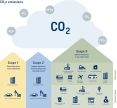
The Greenhouse Gas (GHG) Protocol divides emissions into three scopes. Scope 1 includes all direct emissions from our own operations, such as fuel consumption by our fleet and equipment, and the gas we use to heat offices. Scope 2 covers indirect emissions from the generation of electricity and heat that we consume, while Scope 3 comprises all other emissions in the value chain, upstream and downstream of our operations. Scope 3 also includes emissions from the production of purchased materials as well as emissions from the use of homes throughout their entire lifespan after completion.
The figure below shows the different scopes and their contents.
Transition plan
Our climate transition plan forms an integral part of the climate policy. Goals, actions and performance management are aligned in a logical manner, and we report according to ESRS requirements (CSRD) on a consistent basis. The plan is reviewed, updated and submitted to the Executive Board on an annual basis. The results are taken into account in our broader risk assessment and investment decisions.
In 2024, we brought our policies, strategic targets and ways of working together in one single document. Where our climate documentation used to be spread across various documents, this approach now ensures central control, coherence and a clear basis for reporting for which we can provide guidance where required.
Climate mitigation and adaptation
Since 2023, we have been using a roadmap on our journey towards our Net Zero 2040 goal. We mitigate the impact of our emissions by decarbonising our end products, including their manufacturing process, and further by making equipment, production and project sites more sustainable. At the same time, we are embedding climate adaptation in design and implementation, including within the strategic themes of 'Water' and 'Biodiversity'. We are also providing demonstrable insight into climate mitigation by fulfilling the requirements of the EU (European Union) Taxonomy.
Energy efficiency
The Trias Energetica principle is an important basis for the efficient use of energy. We monitor our energy consumption and are actively focusing on energy efficiency to reduce overall demand. This remains a crucial point, even when using renewable energy. After all, lower consumption means less generation is required, and we can achieve our climate goals faster and with greater resilience.
We apply the Trias Energetica principle as follows:
-
Minimise the energy demand (through choices in design, implementation and logistics).
-
Maximise the generation and use of renewable energy.
-
Limit the remaining energy demand from fossil sources as efficiently as possible and offset where necessary.
Electrification and grid capacity
Accelerating the electrification of cars, commercial vehicles and equipment makes a direct contribution to our ambition in the area of climate mitigation. At the same time, this increases the pressure on the electricity grid and makes project logistics increasingly complex, as it adds in further transport for charging batteries and more. We acknowledge these operational effects and provide guidance in planning and execution.
Renewable energy and guarantees of origin
Every year, we ensure all our purchased electricity and gas undergoes a greening process with Guarantees of Origin (GoOs), accelerating the reduction of our negative impact on the climate. In addition to ensuring that our gas and electricity come from renewable sources, we are increasing the share of directly available renewable energy, for example by installing solar panels at offices and on building site.
Alternative energy sources (H2/HVO)
Where electrification is not yet (fully) possible, we use 100% hydrotreated vegetable oil (HVO100) as a sustainable alternative to conventional diesel, including for vehicles and trucks holding a grey registration. We monitor progress and compliance through regular fuel delivery reporting. This policy has been further rolled out to the carriers we engage as of this year. We are also exploring how this can be extended to other subcontractors.
Scope
Our own operations
Our policy applies to all Heijmans' operations, including:
-
Construction, infrastructure and real estate projects, both new-builds and renovations, with scope for implementation differences.
-
The entire design and construction process, from procurement to delivery.
-
Internal processes, such as the use of equipment on building sites and company cars for commuting
Value chain
We actively work with suppliers of building materials such as asphalt, concrete and steel to reduce emissions upstream. Downstream, we focus on collaboration with clients and end users by building energy-efficient homes (including in line with EPC standards) and climate-adaptive infrastructure, such as permeable roads.
Standards and initiatives
Our policies align with international frameworks for the climate transition and emission management, including:
-
Science Based Targets initiative (SBTi) Net Zero Standard
-
Task Force on Climate-Related Financial Disclosures (TCFD) – Metrics, Targets & Transition Plans
-
Greenhouse Gas Protocol (GHG Protocol) – Corporate Accounting & Reporting
-
Carbon Disclosure Project (CDP) – Reporting on Transition Plans
-
Transform to Net Zero
-
Climate Action 100+
-
CO2 Performance Ladder
These standards are largely based on the GHG Protocol, but differ in emphasis. to make comparing publicly available information a challenge.
Investments in fossil-fuel activities
We are not excluded from the benchmarks established under the European Commission’s Delegated Regulation (EU) 2020/1818, based on the Paris Agreement. In addition, we are not among the companies referred to in Article 12(d) to (g), and Heijmans does not invest in coal, oil and/or gas-related activities.
Strategic targets
Science Based Targets initiative (SBTi)
When setting our climate goals, we asked ourselves a fundamental question: Are we doing enough to limit global warming, and how can we be sure? That is why we have committed to the SBTi, an international organisation that reviews our targets and emissions reporting against the Paris Climate Agreement, based on a maximum warming of 1.5°C. The global carbon budget has been determined based on that figure, as it is the limit above which the risk of serious climate disruption increases. Yet that budget is running out fast. It is therefore crucial to reduce direct emissions as well as strive for zero emissions over the long term. Our climate targets, supporting documents, action plans and emissions inventory were officially approved by the SBTi in September 2024.
Baseline year
We use 2019 as the baseline year for our climate targets. 2019 provides a stable, representative starting position, as the year was economically and structurally sound and without any disruptions such as COVID-19. In addition, the sector already had a clear focus on sustainability and innovation at that time. We analysed KNMI data from De Bilt to make sure that 2019 was not an exceptional year in terms of weather conditions, and arrived at the conclusion that 2019 is a suitable reference year, with temperatures, hours of sunshine and precipitation close to the ten-year average. This means we can track our progress consistently and set realistic, measurable goals moving towards 2030.
Recalculation policy
We also have a clear recalculation policy in place to keep our climate targets reliable and up to date. This policy is based on the GHG Protocol and the additional requirements set by the SBTi. In the event of significant changes in our organisation, such as mergers, acquisitions or demergers, we will recalculate the baseline year and adjust the comparative reporting data accordingly. Methodological improvements, such as more accurate measurement methods, are also grounds for recalculation. In the latter case, we do not use a threshold value, but we will always carry out a recalculation to guarantee comparability between years.
The SBTi requires targets to be revised at least once every five years, even if there are no major changes, to make sure they remain in line with more recent insights in climate science. Furthermore, the SBTi guidelines specifically stipulate that a recalculation is required in the event of structural changes that have an impact of 5% or more on our CO2e accounting. We are also planning an additional re-evaluation in 2030, in line with CSRD requirements and EU reporting steps. Finally, we take into account new industry guidelines and benchmarks to ensure our approach stays in line with the most up-to-date insights.
Monitoring
To track our progress properly, we set new targets each year for the year ahead. This takes place after our targets have been reviewed in line with the latest insights and methodological improvements as well as the inventory of greenhouse gas emissions. The targets are based on a linear reduction path between the baseline year and the target year. They serve as clear milestones and indicators to our goal on the horizon as well as measurement points to assess our annual performance. This approach allows us to keep track of our journey and the pace at which we are moving towards meeting our climate ambitions.
Limits
Our targets cover all emission categories for which we are responsible. We do not leave anything out. We have also included land-related emissions and greenhouse gas removals through raw materials for bioenergy to provide a complete, transparent picture of our impact.
2030
Our first milestone is due in 2030, and represents an important step towards our end goal in 2040. We have a shared target for Scope 1 and 2 emissions, while Scope 3 has a separate target, allowing us to maintain focus on all emissions within our value chain.
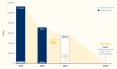
Heijmans is looking to reduce its absolute Scope 1 and 2 emissions by 100% by 2030 compared with 2019
We can reduce our direct emissions to zero by taking sustainable actions with regard to our fleet, equipment, offices and building sites. Key, specific actions include electrification of the fleet (fossil-free in 2026), electrification of company cars (grey-registered vehicles, light vehicles) (fossil-free by 2030 at the latest), full use of green fuels in offices and projects, and electrification of our equipment fleet. For Scope 2, we assess the impact of our market-based consumption, focusing on using electricity exclusively from renewable sources.
Progress
Since 2019, we have reduced our Scope 1 emissions by approximately two-thirds. The most significant gains will be achieved by electrifying our fleet and equipment. We have already reached zero for Scope 2 emissions, as all the electricity we consume is minimised, with the remaining portion greened using Guarantees of Origin. This year again, we are performing well below the target set by the SBTi. That is why we are setting ourselves an even greater challenge this year: we aim to achieve a further 10% reduction in 2026 compared with our 2025 performance.
Heijmans is looking to reduce its absolute Scope 3 emissions by 50% by 2030 compared with 2019
The majority of our emissions, by far, are Scope 3 emissions. In order to reduce these emissions, we are implementing a wide range of actions and studies aimed at all parts of these value chain emissions. The focus lies on two main subjects: the sustainable use of materials (upstream) and energy-neutral buildings (downstream).
An important step is the construction of a new, innovative asphalt plant, Asfaltcentrale Lage Weide (ACLW). The plant will be the most sustainable plant in Europe. Construction began in 2025, with production planned to start in 2026. Innovative technologies mean production is low-emission, odourless and virtually silent. What's more, the asphalt is largely circular as old asphalt is recycled and reused locally. The site in Utrecht was chosen because of its central location, as this allows ACLW to meet a large part of the asphalt demand in the region and abroad quickly and efficiently. This step ensures we are laying a solid foundation for a circular and climate-neutral future.
Progress
Since 2019, we have reduced our absolute Scope 3 emissions by around a third, while our revenue has grown by almost half. We have achieved the significant impact by building energy-efficient homes, which has resulted in a fall in Category 11: Use of Sold Products, our second-largest Scope 3 category. This year too, we are meeting the target in our SBTi reduction pathway.
Category 1: Purchased Goods and Services, which are responsible for more than half of our emissions, increase with our revenue due to the measurement method used. This category is now largely based on expenditure. Higher procurement costs, whether due to growth or sustainable choices, automatically lead to a higher impact being reported. From this year, we will include the first supplier-specific emissions, primarily from our largest asphalt supplier. In the coming years, we will expand this to concrete, steel, installation and wood suppliers.
Making the actual impact of our carriers visible is also high on our agenda. Since 2025, we have asked these parties to only use HVO100 for transports related to our orders. The positive impact this will have is not yet visible in our reporting due to a lack of data.
Although we have achieved our target this year, we are well aware of the high annual fluctuations in Scope 3 reporting. As such, we are mainly focused on the longer-term trend, and not whether the targets for this scope are achieved on an annual basis or not.
Reporting will become more accurate and more comparable as calculation methods improve, allowing us to continue to focus on a structural reduction throughout the value chain as a whole.
2040
Heijmans wants to achieve net zero greenhouse gas emissions across the entire value chain by 2040
We are taking our sustainability goal one step further. By 2040, we want to build and work in a manner that is fully climate-neutral. According to the SBTi definition, net zero means reducing our emissions by at least 90% compared to the baseline year. The remaining emissions will be offset in full.
Heijmans is the first Dutch construction company to set itself the goal of achieving net zero by 2040. Doing so means we are aiming to be ten years ahead of many other companies and the ambition set out by the European Union in the European Climate Law. This step underlines our belief that building a healthy living environment also means taking responsibility for the climate.
Actions
Materiality
For each action, we first provide insight into the material topic to which it makes a contribution. This clearly explains why the action is relevant within our sustainability strategy. We then state the specific strategic objective to which the action relates, including the timeframe by which the objective must be achieved. We also indicate the size of the emissions covered by the action based on the level in the baseline year. This provides some context and explains the contribution the action can make to reducing our total emissions.
Specifications
In order to be clear where an action is being implemented and has an impact, we explicitly state in the table the pillar of our value chain in which the action has an impact. We also indicate which business unit is responsible for its implementation and which operations are affected by the action.
Further information includes the type of solution (whether it is nature-based or technological, for example), while we also link the relevant decarbonisation lever (the mechanism with which the action reduces emissions). Heijmans distinguishes between electrification, energy efficiency, equipment efficiency and product optimisation.
Governance
We associate a clear responsibility with each action. The ultimate owner is often a member of the Executive Board or a chair of a business area. They are responsible for achieving the targets for which an action is created.
In addition to the person bearing final responsibility, another person always assumes operational responsibility. This is usually the sustainability programme manager of the relevant business area, but it may also be a manager in a specific business unit. They monitor the daily progress, ensure that actions are carried out and provide regular reports to the ultimate owner.
Impact
For actions that make a direct contribution to reducing greenhouse gas emissions, an estimate is made of the reduction in percentage and tonnes of CO2e compared with the baseline year 2019. We review these figures annually and recalibrate them where necessary, for example if emissions in the baseline year are adjusted.
The reduction percentages for Scope 1 are based on the proportion of the relevant category in the Scope 1 inventory of the reporting year. We use estimates for Scope 3 to mirror the size of the task to the impact of the action.
It is not yet possible to make the impact achieved per action transparent. The overall reduction achieved by all actions combined can be seen in the table “Total greenhouse gas emissions” later in this chapter.
Resources
We use a range of resources to implement our actions. We have roles and specialised teams within the organisation who are responsible for achieving our sustainability goals and complying with ESRS requirements.
These teams are supported by technological solutions, such as smart IT systems and tools for data-driven decision-making and sustainability reporting. This ensures we maintain insight, transparency and control over our progress.
We also have operational resources that make a difference directly on our building sites, such as new processes under development, the deployment of energy hubs and the use of electric equipment. This combination of human power, technology and innovative resources shows we are accelerating the transition to a climate-neutral future.
For actions that require financial resources, both in terms of operational costs (OpEx) and investments (CapEx), we report an estimate of these amounts. These amounts are then linked to the relevant items in the financial statements and, where applicable, to the EU Taxonomy. These financial estimates are also reviewed and reassessed on an annual basis. In 2025, no financial resources were allocated directly to actions; all costs were incurred when replacements were due as a matter of course.
Framework conditions and dependencies
We cannot carry out every action independently and with certainty. A large number of actions (mainly those involved in reducing Scope 3 emissions) require collaboration throughout the value chain or sector-wide agreements. Examples include suppliers who need to stay in step with you or when common standards need to be developed.
We have set out framework conditions to understand what is needed in addition to our own commitment. These conditions clarify which external factors are key in making an action a success. This allows us to see where we can and should exert influence and where we are largely dependent on partners or regulations.
Technological innovations, such as developing more sustainable versions of concrete, steel and asphalt, are essential for reducing our Scope 3 emissions. These materials have a significant impact in our value chain and require circular, low-emission solutions.
Technology also plays a key role when it comes to Scope 1 emissions. We can only achieve zero direct emissions if we can electrify heavy equipment or fit alternative drive systems, all of which requires collaboration with suppliers, investment in innovation and testing new technologies on our projects.
By making dependencies and framework conditions clear, we increase transparency and can engage in discussions with the right parties in good time. This allows us to ensure that our ambitions are not just words, but can also be achieved in practice.
Overview
The table below provides a simplified, concise overview of the actions that we have already started or that are still in progress in the reporting year.
|
Target |
Material topic |
Action |
Decarbonisation lever |
Value chain |
Year-end |
Reduction of tCO₂e 2030* |
Reduction tCO₂e 2040** |
CapEx |
OpEx |
Boundary conditions and dependencies |
|---|---|---|---|---|---|---|---|---|---|---|
|
Reduce Scope 1 and 2 (market-based) emissions by 100% in 2030 compared to the baseline year 2019. |
Climate mitigation |
Energy-efficient lighting in offices |
Energy efficiency |
Own operations |
Ongoing |
- |
- |
- |
- |
- |
|
Optimisation of construction logistics |
Energy efficiency |
Ongoing |
- |
- |
- |
- |
- |
|||
|
Use of construction hubs |
Energy efficiency |
Ongoing |
- |
- |
- |
- |
- |
|||
|
Electrification of vehicle fleet |
Electrification |
2026 |
14,009 |
- |
- |
- |
- |
|||
|
Electrification of commercial vehicles |
Electrification |
2030 |
7,005 |
- |
- |
- |
Innovation among suppliers |
|||
|
Electrification of heavy equipment and lorries |
Electrification |
2030 |
12,258 |
- |
- |
- |
Innovation among suppliers |
|||
|
Grey number plates and large pieces of equipment that cannot (yet) be electrified to HVO-100 |
Switch to other fuels |
Ongoing |
- |
- |
- |
- |
- |
|||
|
Guarantee that all gas and electricity comes from renewable sources, through the purchase of guarantees of origin |
Use of renewable energy |
Ongoing |
1,751 |
- |
- |
- |
- |
|||
|
Installation of solar panels at office locations and site huts |
Use of renewable energy |
Ongoing |
- |
- |
- |
- |
Agreements with owners regarding leases and landlords' ambitions for multi-tenant properties |
|||
|
More sustainable building sites, by using electricity from nearby wind farms and solar parks |
Use of renewable energy |
Ongoing |
- |
- |
- |
- |
- |
|||
|
Reduce Scope 3 by 50% in 2030 compared to the baseline year 2019 and achieve Net Zero in 2040. |
Climate mitigation |
Energy-neutral buildings |
Product optimisation |
Downstream |
2040 |
176,078 |
176,078 |
- |
- |
Ambitions of our clients |
|
Sustainable use of materials, including the use of biobased materials (e.g. industrial construction of wooden houses and hemp-based insulation), circular applications in concrete, geopolymer, asphalt mixtures, reuse. |
Material efficiency |
Upstream |
2040 |
11,739 |
11,739 |
- |
- |
Innovation among suppliers |
||
|
Minimising the impact of business travel and commuting through bicycle plans, working from home policies, overnight accommodation options, etc. |
Behavioural change |
Own operations |
2040 |
293,463 |
293,463 |
- |
- |
- |
||
|
Zero-emission transport and equipment in the value chain (HVO policy, facilitating sustainable building sites, value chain cooperation) |
Switch to other fuels, electrification |
Downstream |
2040 |
105,647 |
105,647 |
- |
- |
Innovation among suppliers |
||
|
N/A |
Climate adaptation |
Construction of climate-adaptive buildings |
Product optimisation |
Across the entire value chain |
2040 |
- |
- |
- |
- |
Ambitions of our clients |
- *Reduction compared to baseline year 2019.
- **Reduction compared to 2030
Energy use
Reporting obligation
We only operate in sectors that have a high climate impact, as listed in the European Commission's NACE list (sections A to H). This means that we bear a great responsibility and have additional reporting obligations due to our significant contribution to climate change.
We are expected to provide insight into not only the total energy consumption, but also the origin of such energy sources. Transparency about where our energy comes from – fossil, renewable or otherwise – is essential for assessing our progress towards climate goals.
Calculation method
Our reporting is based on a combination of reliable data sources. We use data exports from suppliers, the reading of building performance data (including our own energy generation) and values from invoices. This approach ensures a complete, transparent picture of our energy consumption.
The sources we use are the same as those used to calculate our Scope 1 and 2 emissions. The difference lies in the unit – for energy consumption, we convert figures to megawatt hours (MWh) instead of CO2 equivalents (CO2e).
The exact calculation methods, assumptions and sources used are explained in detail in the table Reporting requirements.
Overview
|
2025 |
2024 |
|||
|
Energy carrier |
Energy (MWh) |
Percentage (%) |
Energy (MWh) |
Percentage (%) |
|
Fossil |
||||
|
Coal |
- |
- |
||
|
Crude oil and petroleum products |
34,755 |
50,306 |
||
|
Natural gas |
6,725 |
7,644 |
||
|
Other fossil sources |
750 |
1,024 |
||
|
E/W/S/K from fossil sources |
791 |
4,028 |
||
|
Total fossil |
43,022 |
37% |
63,002 |
51% |
|
Nuclear energy |
- |
- |
||
|
Total nuclear energy |
- |
- |
- |
|
|
Renewable energy |
- |
- |
||
|
Fuel from renewable sources |
42,948 |
34,493 |
||
|
E/W/S/K from renewable sources |
30,985 |
24,119 |
||
|
Self-generated energy |
903 |
993 |
||
|
Self-generated energy consumption |
398 |
993 |
||
|
Total renewable energy |
74,331 |
63% |
59,606 |
49% |
|
Total energy consumption |
117,353 |
100% |
122,608 |
100% |
Energy intensity
In addition to absolute figures, we also show energy intensity figures to make our efficiency and sustainability efforts more transparent. Absolute figures show how much energy we use in total, but say nothing about how efficiently we use it.
The energy intensity shows the amount of energy we use per million euros in revenue. This allows performance to be compared regardless of revenue growth or the size of the business, and allows us to demonstrate that we are working more efficiently and sustainably, even if absolute energy consumption rises due to increasing operations.
For this calculation, we link the energy consumption to Heijmans N.V.'s total consolidated turnover, as reported in the statement of profit and loss. This is relevant because all our operations fall within high climate impact sectors, as explained in the 'Energy consumption – Reporting obligation' section.
By presenting both absolute and relative figures, we provide a complete picture of our progress towards an energy-efficient and climate-neutral future.
|
2025 |
2024 |
|
|
Turnover (in million) |
2,772 |
2,584 |
|
Total energy (in MWh) |
117,353 |
122,608 |
|
Energy intensity |
42 |
47 |
Greenhouse gas emissions
Inventory
We map out our impact on climate change by making an inventory of our greenhouse gas emissions according to the Greenhouse Gas Protocol, as well as the requirements of the SBTi and, where necessary, clarified with the Scope 3 guide from the Dutch Green Building Council (DGBC).
Consolidation
For our emissions reporting, we consolidate 100% of the greenhouse gas emissions over which we have full operational control. In the construction sector, it is not appropriate to include entities with shared control in full. We therefore take a proportionate approach. For holdings in which we do not have a full interest or control, we include the emissions in the relevant Scope 1, 2 and 3 categories based on the size of the work packages within said holding (as a proxy for our share). An exception to this is AsfaltNu. Although we do not have any operational control, this party is an important player in our value chain. The related emissions are reported in Scope 3, under Category 1: Purchased Goods and Services.
Calculation methods
Each scope requires its own approach and calculation method in order to obtain a reliable picture of the emissions.
-
Scope 1: Our direct emissions are calculated based on data from our facilities business and external sources, such as leasing companies and fuel suppliers on projects.
-
Scope 2: We determine the indirect emissions using purchased electricity, heat, steam and cooling, based on data from utilities companies.
-
Scope 3: This category is the most diverse and requires a different method for each component. We sometimes use calculations based on procurement expenditure, while in other cases we use exact calculations created at project level.
All methods applied, assumptions made and sources used are explained in detail in the table Reporting requirements. to ensure transparency and comparability in our reporting.
Global Warming Potential
We report in line with the latest IPCC report, which sets out the current Global Warming Potential (GWP) values of greenhouse gases. Given emission factor databases are often lagging behind with such updates, there are no complete datasets that fully meet this requirement. That is why we adjust the emission factors ourselves; we work with the most recent, externally validated values for each emission factor and greenhouse gas.
We also believe consistency within a financial year is essential, as this allows emissions to be compared and reproduced. We therefore choose to update emission factors once a year during the first week of January. We do this for the current reporting year, the previous year and the baseline year. To ensure that our sustainability reporting is based on the latest insights and we can keep track of trends throughout the year.
Scope 1
We measure our Scope 1 emissions based on the actual quantities of fuel purchased, which means we include emissions from stationary combustion, mobile combustion, process emissions and volatile emissions.
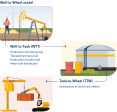
Up to and including 2024, we reported Scope 1 emissions based on Well-to-Wheel (WTW) emissions from energy carriers. However, this led to emissions being counted twice in combination with our Scope 3 reporting. As a result, we opted for a split approach as of 1 January 2025:
-
Scope 1: Emissions based on Tank-to-Wheel (TTW)
-
Scope 3: Emissions based on Well-to-Tank (WTT)
This allows us to report each part of the impact in the right category and improve the accuracy of our figures.
To ensure comparability with 2024, we have also included the figure calculated using the old method in this report. This is included in an additional line below the greenhouse gas emissions table later on in this report.
Biogenic emissions
From this year onwards, we also report biogenic emissions released from the combustion of fuels in Scope 1. No suitable emission factors were available for doing so in previous years.
Scope 2
For Scope 2 emissions, we report the emissions released from all the electricity, heat, steam and cooling we purchase. We use two approaches for doing so.
-
Location-based: We calculate the impact using emission factors based on the national average. This provides an insight into the emissions that actually take place in the network that serves us, regardless of specific energy choices.
-
Market-based: Here we use the same underlying data, but apply emission factors corresponding to what we have purchased under contract. Examples include green electricity certificates or renewable energy contracts.
By displaying both methods side by side, we show how we are actively making our energy consumption more sustainable. The location-based method provides a realistic picture of the physical emissions in the network, while the market-based method provides an insight into the choices we make to reduce our impact. This allows us to be transparent about how our efforts contribute to a climate-neutral future.
In our objectives and targets, we always use market-based Scope 2 reporting, as it best represents our actual consumption and impact.
Scope 3
Categories
Scope 3 consists of fifteen categories, divided into upstream and downstream. Not all categories are relevant for Heijmans. An extensive analysis has identified which categories apply to our organisation and which do not. We then classified the relevant categories according to size, impact, risks and importance to stakeholders. The categories that are not applicable are explained in more detail in the next section. These are unchanged compared to 2024.
Some of the categories we measure continue to be small and barely material. Nevertheless, we have included them in our reporting, as we believe it is important to take responsibility for our impact as a whole. After all, what may seem small today could become large tomorrow.
Excluded categories
Six categories in Scope 3 are not applicable. We use upstream leased assets (Category 8) in our direct operations; these are therefore recognised and reported in our Scope 1 and Scope 2 emissions. We do not have any downstream leased assets (Category 13). As a construction company, we supply products that are used directly on site, which means Category 9 (Downstream Transportation and Distribution) and Category 10 (Processing of Sold Products) do not apply. Category 14 (Franchises) is also not relevant, as we do not have any franchises. Finally, Category 15 (Investments) cannot be reported unambiguously under the GHG Protocol, given the nature of our interests, as explained above in the section “Consolidation”.
Total greenhouse gas emissions
Overview
The table below presents the totals for each scope.
|
Performance |
Ambitions |
|||||||||||
|
Category (in tonnes of CO₂e) |
2019 |
2024 |
Target 2025 |
2025 |
2024-25 % |
2019-25 |
2026 |
2030 |
2035 |
2040 |
Reduction per year % |
|
|
Scope 1 emissions |
||||||||||||
|
Total scope 1 emissions* |
28,706 |
14,512 |
13,061 |
10,442 |
-28% |
-64% |
9,398 |
- |
- |
- |
-10% |
|
|
Biogenic scope 1 emissions |
1,177 |
9,509 |
11,412 |
|||||||||
|
% Scope 1 emissions in ETS |
||||||||||||
|
Scope 2 emissions |
||||||||||||
|
Location-based scope 2 |
6,546 |
9,067 |
8,556 |
|||||||||
|
Market-based scope 2 |
6,317 |
1,155 |
109 |
- |
- |
- |
- |
0% |
||||
|
Biogenic scope 2 emissions |
- |
- |
- |
|||||||||
|
Scope 3 emissions |
||||||||||||
|
Total scope 3 emissions |
1,173,851 |
819,971 |
838,877 |
718,171 |
-12% |
-39% |
682,262 |
586,926 |
293,463 |
- |
-5% |
|
|
1 |
Purchased goods and services |
378,999 |
454,849 |
467,161 |
||||||||
|
2 |
Capital goods |
3,835 |
7,407 |
6,562 |
||||||||
|
3 |
Fuel and energy |
6,251 |
5,334 |
4,868 |
||||||||
|
4 |
Transport (upstream) |
24,869 |
34,964 |
30,364 |
||||||||
|
5 |
Waste |
9,254 |
9,402 |
8,834 |
||||||||
|
6 |
Business transport |
307 |
92 |
31 |
||||||||
|
7 |
Commuting |
4,049 |
3,543 |
688 |
||||||||
|
11 |
Use of sold products |
739,547 |
298,974 |
195,917 |
||||||||
|
12 |
End-of-life products sold |
6,740 |
5,405 |
3,746 |
||||||||
|
Biogenic scope 3 emissions |
- |
- |
- |
|||||||||
|
Total greenhouse gas emissions |
||||||||||||
|
Total location-based GHG |
1,209,103 |
843,550 |
737,169 |
|||||||||
|
Total market-based GHG |
1,208,874 |
835,638 |
728,722 |
-13% |
-40% |
691,660 |
586,926 |
293,463 |
- |
-5% |
||
|
Total biogenic emissions |
1,177 |
9,509 |
11,412 |
|||||||||
|
* If the figures in this row were calculated according to the old calculation method (WTW), they would give the following result: 2019: 34,895, 2024: 19,827, 2025: 15,312. For explanation, see section 'Scope 1' in this chapter. |
||||||||||||
Greenhouse gas intensity
Explanation
Although absolute emissions provide insight into our total emissions, they are difficult to compare between companies that differ in size or sector. As a result, we also use greenhouse gas intensity as a benchmark.
Intensity expresses emissions in relation to a relevant unit, such as revenue. This allows performance to be compared and shows how efficiently we work, even as our business grows.
Reporting both absolute emissions and intensity figures allows us to provide a complete picture of how much we emit and how sustainable our production processes are. We therefore make it clear that we are not only focusing on reductions in absolute terms, but also on making structural improvements to our efficiency.
Calculation method
To calculate the emission intensity, we divide the total emissions, expressed in tonnes of CO2e, by Heijmans N.V.'s consolidated revenue in millions of euros. The revenue figures can be found in the statement of profit and loss in our Annual Report.
|
Greenhouse gas intensity (BKGI) |
2025 |
BKGI |
2024 |
BKGI |
|
Turnover (in million euros) |
2,772 |
2,584 |
||
|
Total GHG location-based (in tonnes of CO₂e) |
737,169 |
266 |
843,550 |
326 |
|
Total GHG market based (in tonnes CO₂e) |
728,722 |
263 |
835,638 |
323 |
Greenhouse gas removals
Policy
In our value chain, greenhouse gas removals occur through biogenic storage in biobased materials that we purchase for new-build homes, such as wooden boards, beams and insulation materials. These materials store carbon and help to reduce our net impact.
We map out these removals according to the guidelines set by the GHG Protocol to ensure a transparent, internationally recognised methodology is used. As soon as additional consensus methods become available, such as through the EU's Carbon Removals Certification Framework, we will apply them in our administrative processing.
This approach means we not only comply with current standards, but are also at the forefront of implementing new frameworks that contribute to reliable, future-proof reporting.
Overview
In the table below, we explain which greenhouse gas removals we realised in our direct operations and in our value chain in this financial year.
|
Removals |
2025 |
2024 |
|
Own operations (direct) |
||
|
None |
||
|
Total |
||
|
Value chain (indirect) |
||
|
Upstream (Horizon project) |
2,735 |
3,235 |
|
Total GHG removals (tonnes of CO₂e) |
2,735 |
3,235 |
|
Reversals |
|
Project Horizon (basic home) |
|
|
Greenhouse gases |
Carbon dioxide (CO₂), nitrous oxide (N2O), methane (CH4) and fluorinated gases (F-gases). |
|
Technology |
Biogenic storage. |
|
Calculation method |
The Centrum Hout calculation module CO₂ storage in wood based on the calculation method from the EN 16449 standard “Wood and wood based products - Calculation of sequestration of atmospheric carbon dioxide”. |
|
Nature-based |
Yes, because it utilises natural processes such as the growth of biobased materials, contributes to the preservation and restoration of ecosystems, assists in climate mitigation by reducing greenhouse gas emissions, and promotes biodiversity through the use of diverse biological materials and the creation of habitats. |
|
Management |
Leaks and reversal events are prevented by the conscious strategic choice to focus on modularity and standardisation, so that the chance of achieving the designed service life (and thus the calculated CO₂e storage) is achieved and probably exceeded in the worst case. |
|
Quantity |
2,735 tonnes CO₂e |
Offsetting with carbon credits
Policy
We are committed to reducing our direct emissions (Scope 1) and indirect emissions from our energy use (Scope 2) to zero by 2030. This strategic objective has been scientifically reviewed by the SBTi. Until such time, we want to limit our impact as far as possible. That is why we offset the remaining emissions through certificates in projects that capture greenhouse gases over the long term or replace fossil fuel emissions with sustainable alternatives.
Our offset projects in the Netherlands are verified by Stichting Nationale Koolstofmarkt (SNK). Projects outside the Netherlands meet the Verified Carbon Standard (VCS) or the Gold Standard. We believe reliability and effectiveness are key, as is the maximum term of five years for certificates. We select projects within the European Union that focus on renewable energy (wind, solar, hydro) and planting forests. We are also looking at working with Staatsbosbeheer (Dutch Forestry Commission) to strengthen forests in the Netherlands.
This year, we entered into a special partnership with ORCA, which focuses on circular collaboration in practice. The ORCA project recycles 45 million kilograms of plastic every year, with the majority – around 60% – reused in the Netherlands.
The associated CO₂ depositary receipts relate specifically to the recycling of plastic waste in the Netherlands, around half of which originates from construction and demolition streams. The recycled material is also partly reintroduced into the Dutch market, meaning this is not merely an administrative exercise but a tangible contribution to our shared sustainability goals.
This project shows we are meeting our circular goals and showing what collaboration in the value chain can do. Together, we can make an impact – with less waste, less CO2 and greater reuse of valuable raw materials to build projects as well as a future where sustainability is the norm.
In 2025, around 66% of the carbon credits purchased came from this project. The remaining 34% came from a European biomass project; these credits were carried over from last year, as our footprint was also significantly lower then.
Credits are purchased on an annual basis, without fixed contracts, and any surplus is transferred to the following year. All credits are withdrawn using the 'Corresponding Adjustments' system to avoid duplicate registration.
This approach allows us to ensure transparency and contribute to a climate-neutral future.
Gas consumption, which forms part of gross Scope 1 emissions in 2024 (1,358 tCO₂e) and 2025 (1,355 tCO₂e), is not offset using carbon credits; instead, it is ‘greened’ through the use of guarantees of origin (GvOs). The use of these GvOs may not be deducted from our gross Scope 1 figure, but it does cover the direct impact of our gas consumption.
|
CO₂ credits |
2025 |
2024 |
|
Total (in tonnes of CO₂e) |
9,089 |
16,871 |
|
Removal projects |
||
|
Reduction projects |
Project A |
Project A |
|
66% (5,960 credits) |
100% (16,871 credits) |
|
|
Circular plastics project Netherlands, plastic waste streams from the construction sector, among others, are processed into raw materials for new plastic products. |
The aim of the project is to make use of available renewable energy resources in the form of biomass residues received as a result of the pre-treatment of wood for the production of bleached kraft pulp in a pulp mill. |
|
|
Project B |
||
|
34% (3,129 credits) |
||
|
Biomass project Europe. The aim of the project is to make use of available renewable energy resources in the form of biomass residues received as a result of the pre-treatment of wood for the production of bleached kraft pulp in a pulp mill. |
||
|
Verified |
100% |
100% |
|
Share of projects in the EU |
100% |
100% |
|
Corresponding adjustments |
100% |
100% |
|
CO₂e credits planned |
Quantity (tonnes CO₂e) |
Intended for |
|
Total |
1,939 |
2026 |
Net zero residual missions
At Heijmans, we make every effort to achieve our climate goals without using offsetting. However, we recognise that residual emissions may still remain in 2040 that cannot be neutralised in full, such as from commuting. We intend to use greenhouse gas removals and offsetting certificates for such emissions that cannot be avoided. This decision is based on current insights, as there is no guarantee that all emissions in all categories can be lowered to zero. Transparency is essential here.
When submitting our targets to the SBTi, we estimated that they represent approximately 10% of our 2019 baseline year emissions. That corresponds to around 116,000 tonnes of CO2e.
This approach remains true to our goal of reducing emissions in our own value chain as far as possible, and only offsetting when we have no other option. In doing so, we are gradually building a climate-neutral future with realistic choices and maximum impact.
Internal carbon pricing
Heijmans has set up a system for internal CO2e pricing. The aim of this is to create awareness of CO2e impact, to provide an extra incentive for sustainable innovations and to distribute the costs associated with neutralising our Scope 1 and 2 footprint proportionally across the company's business areas. This pricing will serve as an incentive for those in the business areas responsible for the implementation of climate policy and targets. This carbon pricing system does not take into account planned actions to reduce these emissions. Scope 3 emissions, Whoon and Van Gisbergen are not (yet) included in this system.
The price of one tonne of CO2e in 2020 was determined on a one-off basis based on a study of the price of carbon credits. We compared prices from different providers and different types of projects that meet our requirements, after which we took an average. Since then, we have adjusted this price annually by following the trend in the price development of carbon credits and then applying a correction based on inflation.
|
Carbon pricing |
Volume (tonnes CO₂e) |
% distribution scope 1&2 |
Price |
Perimeter |
|
|
Internal CO₂e fund |
2024 |
23,616 |
95% s1, 5% s2* |
€11.65 per tonne |
Heijmans total, scope 1 & 2 |
|
2025 |
19,458 |
99% s1, 1% s2* |
€15.00 per tonne |
Heijmans total, scope 1 & 2 |
|
- *The scope 2 CO₂e footprint consists only of heat, as all our electricity comes from renewable sources.
Reporting requirements
|
Reporting requirements |
KPI definition |
Methodology |
Assumptions |
Limitation |
|
|---|---|---|---|---|---|
|
E1-5 |
37 (a) |
Total energy consumption from fossil sources. |
Total energy consumption from fossil fuels is calculated as the sum of the various fossil energy sources. |
No assumptions are made for calculating this data point. |
No specific limitations identified on this data point; additional explanations are provided in DR 38 a to e. |
|
The information is provided by the energy suppliers. |
|||||
|
37 (b) |
Total energy consumption from nuclear energy. |
No nuclear energy was consumed in 2025. |
No assumptions are made for calculating this data point. |
There are no restrictions on calculating this data point. |
|
|
37 (c) i. |
Total energy consumption from renewable fuels (fuel). |
Underlying data for HVO100 is retrieved from the respective suppliers. |
No assumptions are made for calculating this data point. |
There are no restrictions on calculating this data point. |
|
|
Conversion from litres to MWh is done on the basis of the energy intensity per fuel unit (Klimaatakkoord.nl), whereby the unit is converted to joules and then to the relevant unit. |
|||||
|
37 (c) ii. |
Total energy consumption from renewable fuels (purchased). |
Data is extracted from the energy supplier's bills, which are then converted to MWh. |
No assumptions are made for calculating this data point. |
There are no restrictions on calculating this data point. |
|
|
A small portion of the figures cannot be retrieved based on invoice data and are specifically estimated using data from energy supplier Engie. |
|||||
|
For the specific energy consumption of Whoon offices (singular), estimated figures are used based on the number of floors rented in its buildings. |
|||||
|
37 (c) iii. |
Total energy consumption from renewable fuels (non-fuel). |
Energy consumption from solar panels. |
Office locations that cannot be read are excluded from reporting, after it has been estimated that this will not result in any material differences in our energy reports. |
At some office locations, generation and consumption cannot yet be accurately read. |
|
|
38 (a) |
Fossil fuel consumption from coal and coal products. |
Coal consumption is an activity that does not occur at Heijmans. Therefore, this figure is zero. |
No assumptions are made for calculating this data point. |
There are no restrictions on calculating this data point. |
|
|
38 (b) |
Fossil fuel consumption from crude oil and petroleum products. |
Invoice data from suppliers (e.g. Leaseplan and Oliecentrale Nederland) is used to calculate how much fossil fuel is consumed. This is received in litres and converted to MWh. |
No assumptions are made for calculating this data point. |
There are no restrictions on calculating this data point. |
|
|
Conversion from litres to MWh is done on the basis of the energy intensity per fuel unit (Klimaatakkoord.nl) where the unit is converted to Joule and successively the relevant unit. |
|||||
|
38 (c) |
Fossil fuel consumption from natural gas. |
Data is extracted from the energy supplier's invoices, which are then converted to MWh. |
No assumptions are made for calculating this data point. |
There are no restrictions on calculating this data point. |
|
|
38 (d) |
Fossil fuel consumption from other non-renewable sources. |
Invoice data from suppliers (e.g. Leaseplan and Oliecentrale Nederland) is used to calculate how much fossil fuel is consumed. This is received in litres and converted to MWh. |
No assumptions are made for calculating this data point. |
There are no restrictions on calculating this data point. |
|
|
Conversion from litres to MWh is done on the basis of the energy intensity per fuel unit (Klimaatakkoord.nl), whereby the unit is converted to joules and then to the relevant unit. |
|||||
|
Reporting requirements |
KPI definition |
Methodology |
Assumptions |
Limitation |
|
|---|---|---|---|---|---|
|
38 (e) |
Fossil fuel consumption from purchased or acquired electricity. |
Consumption of fossil sources for purchased or acquired electricity is offset by Guarantees of Origin, therefore this number is 0. |
No assumptions are made for calculating this data point. |
There are no restrictions on calculating this data point. |
|
|
39 |
Production of (non-)renewable energy. |
Heijmans does not produce fossil energy. Therefore, this figure is zero. |
No assumptions are made for calculating this data point. |
There are no restrictions on calculating this data point. |
|
|
40 |
Energy intensity of activities with a significant climate impact. |
Energy intensity. |
No assumptions are made for calculating this data point. |
There are no restrictions on calculating this data point. |
|
|
Energy consumption based on DR 38. The revenue is taken from the 2025 annual accounts. |
|||||
|
E1-6 |
48 (a) |
Gross scope 1 emissions. |
Heijmans measures scope 1 emissions based on the actual quantities of fuel purchased, which means that we include greenhouse gas emissions from stationary combustion, mobile combustion, process emissions and fugitive emissions in our reporting. We have carried out this inventory in accordance with the GHG-P standard, supplemented with the requirements of the SBTi. |
From 2025 onwards, we will use the tank-to-wheel (TTW) emission factor for scope 1 emissions and the well-to-tank (WTT) emission factor for scope 3. In order to communicate the consequences of this change clearly and transparently, this year we are also showing what the total for scope 1 looks like using the old (WTW) calculation method. We will do this by adding a footnote to the relevant figure. |
There are no restrictions on calculating this data point. |
|
Due to limitations in the calculation method, some consumption locations cannot be included in the reports. After investigation, we have found that this is not a material deviation, but that we will need to investigate this further in the coming year. |
|||||
|
The additive Ad Blue does not yet have a WTW and WTT emission factor in 2025, but it does have a TTW emission factor. Our calculations do include the TTW impact in the WTW figures. |
|||||
|
Data is collected from energy suppliers, Leaseplan and Oliecentrale Nederland multiplied by the CO₂ emission factor of https://www.co2emissiefactoren.nl/lijst-emissiefactoren/. |
|||||
|
48 (b) |
Percentage of scope 1 emissions as part of ETS. |
Not applicable, Heijmans is not covered by an ETS system. |
No assumptions are made for calculating this data point. |
There are no restrictions on calculating this data point. |
|
|
49 (a) |
Gross location-based scope 2 emissions. |
Heijmans' gross location-based scope 2 emissions occur in emissions related to purchased electricity, kerosene consumption when flying and fuel consumption of private cars. |
For Van Gisbergen and Whoon data, a full estimate has been made for 2019 based on 2024 and 2025 figures. |
There are no restrictions on calculating this data point. |
|
|
Data is collected from energy suppliers, Leaseplan and Oliecentrale Nederland multiplied by the CO₂ emission factor of https://www.co2emissiefactoren.nl/lijst-emissiefactoren/. |
The majority of our electricity consumption comes from a main supplier. For this supplier, we use a shifted financial year from 24 December to 25 November, due to data availability. |
||||
|
A small portion of our electricity consumption is not supplied by our main electricity supplier. We estimate this portion by checking invoices from potential electricity suppliers. We then divide the amount of electricity purchased by an average price per kWh. |
|||||
|
49 (b) |
Gross market-based scope 2 emissions. |
See calculation for DR 49(a). Specifically, a separate conversion factor (market-based vs. location-based) is used. |
No assumptions are made for calculating this data point. |
There are no restrictions on calculating this data point. |
|
|
Reporting requirements |
KPI definition |
Methodology |
Assumptions |
Limitation |
|
|---|---|---|---|---|---|
|
50 (a) |
Breakdown of scope 1 and 2 emissions by consolidation scope and underlying subsidiaries. |
See the methodology for scope 1 and 2 emissions. |
No assumptions are made for calculating this data point. |
There are no restrictions on calculating this data point. |
|
|
50 (b) |
No assumptions are made for calculating this data point. |
||||
|
51 |
Breakdown of scope 3 emissions by category. |
Total scope 3 emissions = 1. Purchased goods and services + 2. Capital goods + 3. Fuel and energy + 4. Transport (up) + 5. Waste + 6. Business transport + 7. Commuting + 11. Use of products sold + 12. End-of-life products sold. |
Exclusion of categories: |
Category 3.11 Real estate: |
|
|
In category 3.11 at Non-residential, there is a unique situation at a single project this year that would fall within the set limits but is still not included in the report. This concerns Project A-pier Schiphol, where Heijmans has been asked by Schiphol to carry out work on the A-pier, which is already under construction. The work we carried out was limited to that which was necessary to make the building weatherproof and windproof and to condition it. We acted as a contractor for a limited number of work packages and, in our role, had no influence on the overall energy performance of the building. We therefore bear no responsibility for the energy consumption of Pier A. |
|||||
|
Another project by Utility in reporting year 2024 qualifies as new construction, where Heijmans was responsible for the installation work only as an ancillary contractor. |
|||||
|
Spend analysis. |
|||||
|
Reporting requirements |
KPI definition |
Methodology |
Assumptions |
Limitation |
|
|---|---|---|---|---|---|
|
Per scope 3 category divided on which basis data point is calculated: spend or SSC method. Spend is an expenditure analysis and the SSC method is based on requesting expense claims and recording mileage. |
Whoon and Van Gisbergen categories 2, 3, 4, 5, 6, 7, 12. |
||||
|
53 |
Greenhouse gas intensity. |
Greenhouse gas emission intensity (total greenhouse gas emissions per net revenue): [total greenhouse gas emissions]/[net revenue in million euros]. |
No assumptions are made for calculating this data point. |
There are no restrictions on calculating this data point. |
|
|
Total greenhouse gas emissions: [Scope 1 emissions] + [scope 2 emissions] + [scope 3 emissions]. |
|||||
|
54 |
Greenhouse gas intensity. |
Greenhouse gas emission intensity (total greenhouse gas emissions per net revenue): [total greenhouse gas emissions]/[net revenue in million euros]. |
No assumptions are made for calculating this data point. |
There are no restrictions on calculating this data point. |
|
|
Total greenhouse gas emissions: [Scope 1 emissions] + [scope 2 emissions] + [scope 3 emissions]. |
|||||
|
55 |
The reconciliation of the relevant items or notes in the financial statements with the amount of net revenue. |
N/A |
N/A |
N/A |
|
|
E1-7 |
58 (a) |
Total amount of greenhouse gases stored and removed. |
Greenhouse gas removals are carried out within projects. Removal is calculated using the Centrum Hout CO₂ storage in wood calculation module based on the calculation method from the EN 16449 standard “Wood and wood based products - Calculation of sequestration of atmospheric carbon dioxide”. |
No assumptions are made for calculating this data point. |
There are no restrictions on calculating this data point. |
|
59 (a) |
The total number of carbon credits outside the company’s value chain that have been tested against recognised quality standards (in tonnes of CO₂e). |
Total number of carbon credits: [total number of credits purchased including credits not yet destroyed]. |
No assumptions are made for calculating this data point. |
There are no restrictions on calculating this data point. |
|
|
59 (b) |
The total number of carbon credits outside the company's value chain that are planned for the future. |
Total number of carbon credits: [total number of credits purchased including credits not yet destroyed]. |
No assumptions are made for calculating this data point. |
There are no restrictions on calculating this data point. |
|
|
E1-8 |
63 (c) |
Price for one tonne of CO₂e in euros. |
The price is based on market information from suppliers and different types of projects. The distribution is 100% on scope 1 and 0% on scope 2, as the scope 2 footprint is 0 due to only using electricity from renewable sources. |
No assumptions are made for calculating this data point. |
This estimate does not take into account planned actions to reduce these emissions. Scope 3 emissions are not included in this system. |
|
63 (d) |
Approximate gross volumes of Scope 1, 2 and 3 emissions related to internal carbon pricing expressed in tonnes of CO₂e. |
Gross volumes of emissions related to internal carbon pricing: [estimated scope 1 emissions] + [estimated scope 2 emissions for 2025]. |
No assumptions are made for calculating this data point. |
This estimate does not take into account planned actions to reduce these emissions. Scope 3 emissions are not included in this system. |
|
|
Emissions based on explanations provided in previous rows. |
|||||